
Linux kernel and driver development: five-day training
The Linux kernel is the layer between your hardware and every user-space application. This five-day, hands-on course is a guided tour from the kernel source tree to a working device driver. It starts with the kernel’s role in the system, its source layout and release model, then moves through configuration and cross-compilation, booting with U-Boot, modules and the Device Tree, the device and driver model, I2C and the kernel frameworks, and the kernel internals that drivers depend on: memory management, VFS and the page cache, MMIO, clocks and power, scheduling, interrupts, locking and DMA. The course closes with kernel debugging and the upstream contribution process.
The course follows the mainline Linux source tree and the public kernel-slides deck. The labs build and boot a kernel for a target, using QEMU or a supported board.
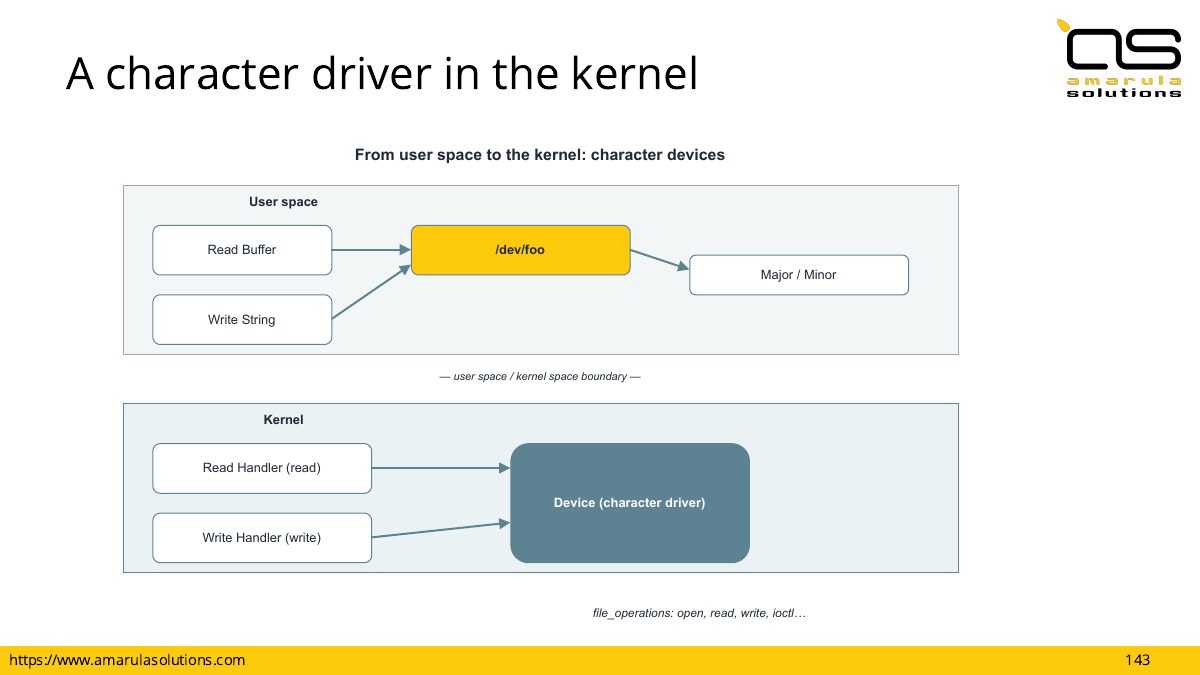
Selected slides from the course deck.
5 days
Minimum 3
Michael Trimarchi
On site only
On request
Download the course preview (PDF)
What you will learn
Navigate the kernel source tree, understand the release model and choose a base for a product.
Configure, cross-compile and install a kernel, and boot it with U-Boot.
Write, build, load and parameterise kernel modules; follow the kernel coding style and pass
checkpatch.pl.Describe non-discoverable hardware in the Device Tree, configure pin muxing and validate bindings.
Follow the device and driver model: buses, platform devices,
probe()and deferred probing.Write an I2C client driver and use the character-driver, input, regmap and devres frameworks.
Work with kernel memory management, the VFS and page cache, and MMIO.
Use the clock, power and misc frameworks, and reason about scheduling, interrupts, locking and DMA.
Debug the kernel with
printk, dynamic debug, debugfs, oops decoding, ftrace, perf and BPF.Prepare, check, post and revise a patch for upstream review.
Who it is for
Engineers moving from application or BSP work into kernel code, who want a structured path through the kernel’s APIs and frameworks.
Teams that maintain board support and need to understand the Device Tree, the driver model and the subsystems behind their hardware.
Teams coming from vendor kernels that want to reduce their delta, support hardware in mainline and contribute fixes upstream.
Five-day programme
The suggested timing is five days. Each day combines lectures, kernel source walkthroughs and practical exercises; each block ends with a checkpoint and discussion.
Foundations
Kernel introduction: role, system calls and pseudo filesystems
Official, stable, LTS and vendor kernel sources
Source tree, versioning, development model and release cycle
Configuration, Kconfig and cross-compilation
Booting with U-Boot, the command line and the kernel log
Modules and hardware description
Kernel modules, utilities and autoloading
Developing modules: hello module, symbols and parameters
Kernel coding style and
checkpatch.plDevice Tree syntax, bindings and validation
Pin muxing and the pinctrl subsystem
Drivers
Device and driver model: buses, platform devices and
probe()Deferred probing and driver data structures
I2C subsystem and an I2C client driver
Character drivers, file operations and
ioctlInput subsystem, regmap and devres
Kernel internals
Memory management, allocators, reclaim and huge pages
VFS, the page cache and file I/O paths
Memory-mapped I/O and
ioremap()Common Clock Framework and devfreq
Processes, EEVDF scheduling and SMP
Concurrency, debugging and upstream
Interrupts, threaded IRQs and deferred work
Locking, RCU and atomics
DMA principles, descriptors and the DMA APIs
Debugging:
printk, debugfs, oops decoding, ftrace, perf and BPFUpstream: preparing, posting and revising a patch
Hands-on labs
The labs follow the deck’s examples. Participants configure and build a kernel for a target, compile and load modules, describe hardware in the Device Tree and follow a driver through the device model.
The exercises cover:
Configuring and cross-compiling a kernel
Installing and booting the kernel with U-Boot
Writing, building, loading and unloading a module
Passing parameters to a module and reading them from sysfs
Describing a device in the Device Tree
Configuring pin muxing with pinctrl
Following
probe()through the device modelWriting an I2C client driver
Registering a character device
Inspecting memory, VFS and MMIO
Debugging with
printk, debugfs and ftracePreparing and posting an upstream patch
Lab requirements
A Linux host with a cross-compiler and kernel headers
QEMU or a supported board for the boot and driver exercises
Network access for the kernel sources
Course preview
The downloadable brief includes the course overview, the five-day programme, the hands-on labs and selected slides from the course deck.
Course materials
The slides are public in the kernel-slides repository. The deck is written with Slidev, and the diagrams are editable draw.io sources. The repository is licensed under GPL-2.0.
The material is inspired by Bootlin’s “Linux kernel and driver development
training”, licensed under Creative Commons Attribution-ShareAlike 3.0
Unported (CC BY-SA 3.0), and by Amarula’s “Introduction to Linux Kernel”.
See the repository LICENSE and the “Inspiration & license” slide for the
attribution.
Prerequisites
C programming: pointers, structures and manual memory management
Linux command line and Git
Embedded Linux basics: bootloader, kernel and root filesystem
A Linux host with a cross-compiler for the lab builds
Your trainer
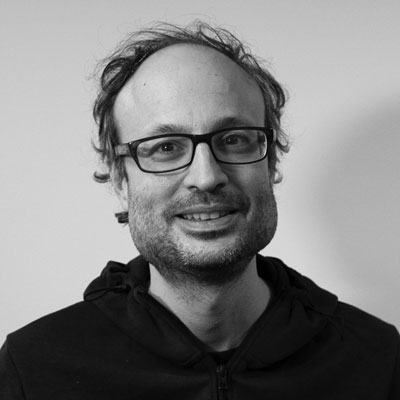
Michael Trimarchi is co-founder and CEO of Amarula Solutions and a Linux software engineer working on embedded and real-time systems. Michael holds a Master’s degree in Software Engineering from the University of Pisa and is co-author of the first version of the EDF patches submitted to mainline Linux.
Michael teaches this training from the perspective of a team that maintains mainline kernel support: how to read the source tree, choose the right subsystem framework and get a driver accepted upstream.
Booking and logistics
Linux kernel and driver development: 5 days, price on request; minimum 3 participants.
Delivery: on site only.
Trainer: Michael Trimarchi.
Format: instructor-led and hands-on, with kernel source walkthroughs and practical exercises.
Materials: the public kernel-slides repository, licensed under GPL-2.0.
Sessions are arranged on request. To reserve the training, request a quotation or contact us.